
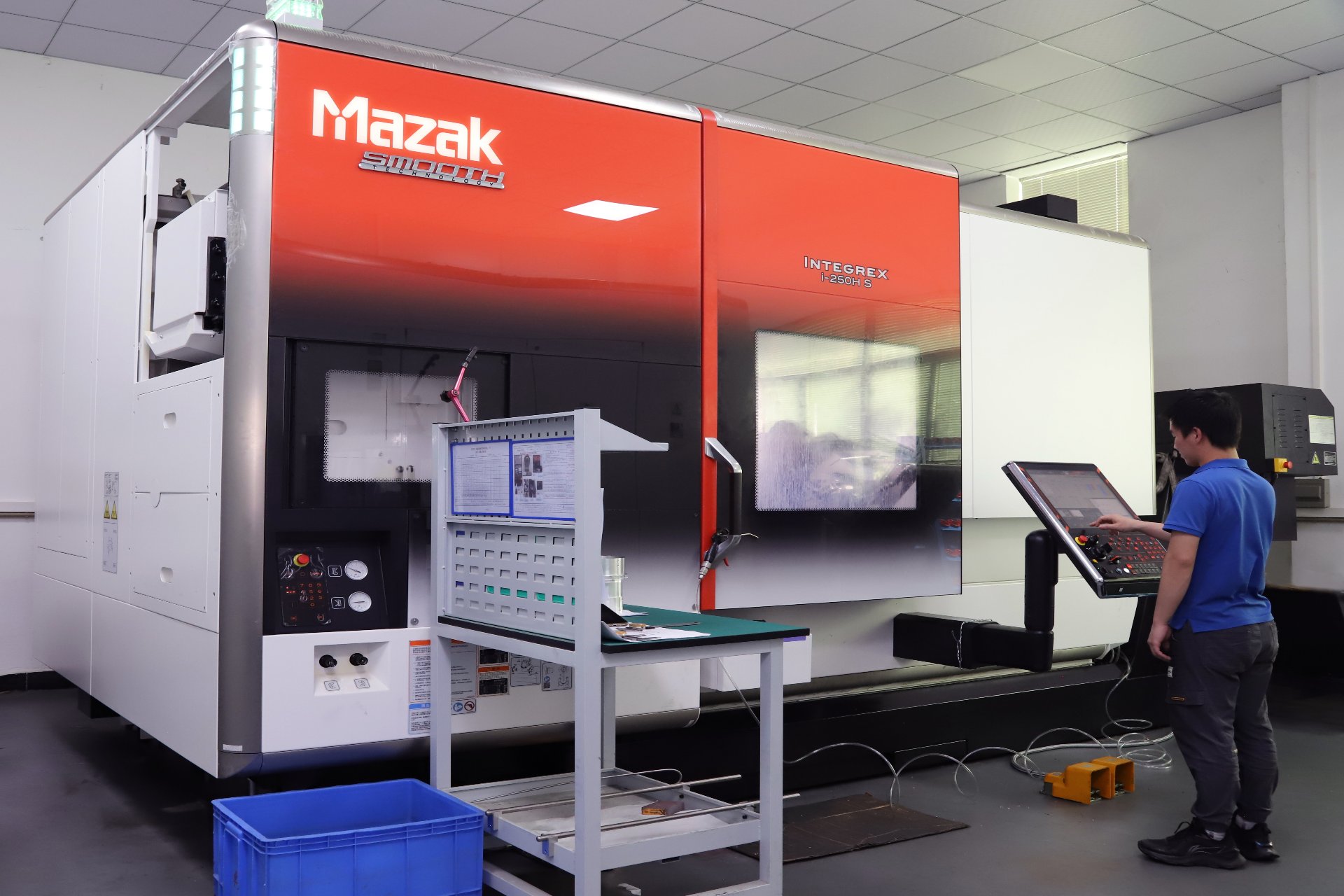
The phrase "machined part" describes where a design finishes, not where it starts. Some machined parts are cut entirely from stock, some begin as castings or forgings and are finished by cutting, and a growing few begin as printed blanks because no cutter could make their interior. Choosing the route is the first manufacturing decision a buyer makes, and it is the one that prices every later step.
Why does the route question come before the RFQ rather than after it?
A route chosen after quoting is a route chosen in the dark, because the quote reflects whatever process the supplier happened to price. When the buyer names the route first, the RFQ tells the supplier what to quote and why, and the responses come back comparable. When the route is left open, one supplier prices stock cutting, another prices casting-plus-finishing, and the two numbers describe different parts wearing the same drawing.
The route decision also decides who can quote at all. A machining factory quotes stock cutting honestly; a casting house quotes blanks and hands the finishing back to a machine shop. A buyer who has not chosen the route cannot assemble the right shortlist, and assembling the wrong shortlist wastes the RFQ round entirely.
Running the decision map before the RFQ takes an hour with the drawing in front of you, and it prevents the most expensive mistake in sourcing: discovering at first article that the part was quoted against the wrong process. The map below is that hour, organized as five questions in the order they eliminate options.
The map is worth re-running at intervals rather than once. A design that fails the tooling crossover today may pass it next year when the volume forecast matures, and a design that was routable to casting may return to stock cutting when a revision changes the material. Treating the route as a living decision, reviewed when the drawing, the volume, or the market changes, is what keeps the manufacturing plan honest over the life of a program rather than frozen at the moment of its first quote.
Question one: what material state does the drawing actually demand?
The first question is the material line, because it closes routes before geometry is discussed. A design that names 7075-T7351 plate, Ti-6Al-4V bar, or 17-4PH in a specified condition has named a wrought product — those conditions exist as bar and plate, not as cast or printed metal carrying the same certificate. The route is machining from certified stock, and no volume or geometry analysis changes it.
Where the material is open, machinability sets the economics of every surviving route. Aluminum and the free-cutting grades cut fast, keeping machining competitive at volumes that would send a slow alloy to a caster. Stainless, titanium, and nickel cut slowly, pulling the crossover to near-net blanks earlier. The material decision and the route decision are one decision made twice.
Engineering plastics add their own fork. Expensive grades like PEEK are machined because volumes are small and material dominates price; commodity plastics are molded because volumes repay the tooling. The same geometry in two polymers legitimately takes two routes, which is why the material line of the drawing must be settled before the route map proceeds.
Question two: what does the working envelope require?
The second question separates the features that must be cut from the features that merely need shaping. The working envelope is the bores, seal faces, threads, locating flats, and datum-defined geometry that carry the design's tolerance; everything else is structural or cosmetic bulk. The envelope is where assemblies actually depend on the part, and it is the part of the design that near-net processes cannot hold.
Machining holds the envelope at ±0.003 mm on milled and turned features with capability at Ppk ≥ 1.67 initial, and grinding reaches ±0.002 mm where a feature needs it. Cast, printed, and formed surfaces typically arrive at ±0.5 mm or looser, so every feature inside the tight band is machined regardless of how the blank was produced. The envelope therefore appears in the cost of every route, and counting its features early prevents the "net shape" illusion.
The envelope also decides the machining sub-route. Axisymmetric envelope features belong to turning; prismatic ones to milling; mixed geometry to mill-turn. Naming the sub-route completes the map's machining branch and gives the factory the information it needs to quote cycle time rather than a guess. Naming the envelope early also names the inspection plan, because the features the design depends on are the features the reports must measure.
Question three: can any cutter reach the difficult geometry?
The third question is geometric reach, and it is close to binary. If the design carries internal curved channels, lattices, or deep re-entrant cavities, no cutter can make the blank, and printing — or casting with cores — is forced regardless of volume. The route then splits: a blank supplier for the unreachable interior and a machining factory for the faces that seal and mount.
Where every feature is reachable from a sensible direction, machining remains the default for the envelope, and the real question is whether the cosmetic bulk should be shaped first. Thin-walled and cored geometry is where shaping first wins, because cutting solid stock to a thin shell wastes most of the material; solid geometry is where cutting the whole part wins, because there is nothing to save by shaping first.
Buyers should be honest about how often the reach question actually forces printing. For a conventional bracket, housing, or flange, the answer is almost never — the design has no interior a cutter cannot reach, so printing would buy the most expensive blank and still pay for the machining. The reach question is a gate, not a fashion statement.
Question four: does the volume and the schedule repay tooling?
The fourth question is commercial, and it decides whether any tooled route survives questions one through three. Cutting carries almost no fixed cost — programming and fixturing — so it dominates from one piece into the thousands. Casting, forging, stamping, and molding carry real tooling cost that only a large run repays, and the crossover typically sits in the thousands, moving with the alloy's machinability.
Design stability joins volume in the same gate. A stable design at high volume justifies tooling; a design still under revision does not, because every change to a tooled route is a tooling project while a change to cutting is a re-program. The option value of an uncommitted process is part of the cost, and buyers who ignore it buy tooling that a revision makes obsolete.
Schedule is the third member of the gate. A tooled route fronts weeks of pattern and die work and a qualification cycle before the first production piece exists; stock cutting starts when certified material arrives. For programs on quarterly horizons, a part that arrives in six weeks is worth more than one arriving in twenty, and that value belongs inside the route arithmetic.
Forecast honesty completes the gate. Volume projections that inflate the order size buy tooling the real demand never repays, and a buyer who quotes a route on optimistic numbers discovers the error only after the die exists and the warehouse is quiet. Project from purchase orders already in hand rather than from the business plan, and let the tooled route earn its tooling against orders rather than against hope.
Question five: what does the delivered-cost ledger say?
Run the surviving routes through one ledger so the numbers land on the same lines. The lines are amortized tooling where the route uses it; per-piece material or blank; machining of the working envelope on any near-net route; inspection and the reports that must ship; finishing; freight; and a line for design-change cost, trivial after cutting and significant after tooling. Compare finished routes — never a finished part against a raw blank.
Two corrections keep the ledger honest. First, count the machining that follows any near-net blank on the working envelope, because a "cast" housing with a seal bore and tapped holes is machined whatever its origin story. Second, price the schedule, because a tooled route's qualification cycle is real time that a quarter-bound program may not have. A ledger that ignores either line routinely picks the route that cannot deliver.
Two further lines belong in the ledger for a factory buyer. Quality is one: inspection time, reports, and the scrap risk behind a route's process capability are costs that arrive with the parts, whether the quote shows them or not, and a route whose blanks need extensive finishing carries more inspection with it. Freight is the other: dense metal parts are expensive to move, and an air leg can exceed the machining line, so the ledger should run on landed cost with the incoterm named rather than on an ex-works total that stops at the factory door.
When the ledger is complete, most designs resolve predictably: wrought material states go to certified stock, high volumes of cast-friendly alloys with loose envelopes go to casting-plus-machining, unreachable geometry goes to printing-plus-machining, and everything else stays with cutting from stock. The exceptions are visible rather than accidental, which is what a decision map is for. Run the map once and the drawing tells you its route; run it twice and you will trust the answer.
What do three worked examples look like on the map?
Run three familiar designs through the questions. A valve body in 6061-T6 bought at two thousand per year names a wrought alloy, carries a small envelope of seal bores and mounting faces, has reachable geometry, and sits below the tooling crossover. All five questions point to machining from plate, and casting never earns a serious look.
A pump housing in a castable aluminum alloy bought at forty thousand per year on a frozen program passes the gates on the casting side: the alloy casts, the cored body suits the die, and the envelope is machined as a planned leg. Cast-plus-machined wins because the volume repays the tooling and the schedule has room for the qualification.
A nozzle body with internal coolant passages cannot be cut, so the reach question forces printing for the blank and machining for the mounting face. The map does not argue with geometry; it routes the two legs to their suppliers and keeps the delivered-cost ledger the arbiter of the whole.
How should the route decision be documented and sent?
Write the route decision onto one page and send it with the RFQ. The page should carry the material callout and the material states each route can legally supply, the working envelope with its tolerances, the reach verdict on the difficult geometry, the volume and the design-stability call, and the delivered-cost ledger for the surviving routes. Sending it tells every supplier what the others are competing against.
Ask each supplier to state where an alternative route would beat its own quote, and at what volume. A machining factory that answers with a real crossover is routing the design; one without an answer is selling its own machine. The answer to that single question tells you more about the supplier than the price on its quote, and it is the cheapest engineering the RFQ will buy.
The map connects to the rest of the buying process: the services overview shows the cutting route's full range, the quality guide covers the measurement every route shares, and the FAQs answer the supplier questions that follow. Choose the route first, then source it well.
Frequently Asked Questions
What is the fastest way to test which route owns a machined-looking design?
Ask which process must make the working envelope — the bores, seal faces, threads, and datums that carry tolerance — and which route can form everything else cheaply. Machining owns the working envelope on almost every part; the contest is only over where the blank comes from.
When does machining win the route decision outright?
When the design names a wrought material only bar and plate supply, when the tight features are numerous, when the volume is too low for tooling, or when the drawing is still changing. Cutting wins all four cases because it carries no tooling to repay and nothing to discard on a revision.
When should a casting or forging win the blank?
When the geometry is chunky or cored, the alloy casts or forges well, the volume repays the tooling, and the design is frozen. The blank then returns to machining for its working envelope, so the honest price is always cast-plus-machined or forged-plus-machined.
What is printing genuinely good at in this decision?
Geometry no cutter can reach — internal channels, lattices, organic interiors — and tiny quantities of expensive alloys where powder-only-in-the-part beats a bar minimum. Printed parts still return to machining for the faces that seal and mount.
What tolerance gap decides most route questions?
Machining holds milled and turned features at ±0.003 mm with capability at Ppk ≥ 1.67 initial, grinding at ±0.002 mm, while cast, printed, and formed surfaces typically arrive at ±0.5 mm or looser. Any feature inside the tight envelope must be cut, whichever route made the blank.
How does the alloy steer the route map?
Fast-cutting families keep machining competitive at higher volumes; slow-cutting families push the crossover to near-net blanks sooner. A named wrought temper closes all near-net routes, because only bar and plate carry that certificate. The material line is where the route map starts.
What should a buyer compare between two surviving routes?
Delivered cost per good part: amortized tooling where it exists, per-piece material or blank, machining of the working envelope on any near-net route, inspection, finishing, freight, and the cost of a design change. Compare finished routes, never a finished part against a raw blank.
What question should a factory buyer always ask its machining supplier?
Ask at what volume a casting or printed blank would beat its stock-cutting quote, and why. A supplier that answers with a real crossover is routing the part; one without an answer is selling its own machine. The answer is the cheapest engineering you will buy.
Run the route map on a drawing?
Send the model, the toleranced drawing, and the quantity to [email protected] or call +86 13126536955. You will get the five-question route read with the delivered-cost ledger behind it.